

Clean vs. Messy Chart of Accounts: Why Structure Wins for Small Businesses
Your chart of accounts is the backbone of your entire financial system. It is the master list that tells every transaction where it belongs: revenue, expenses, assets, liabilities, and equity.
When it is clean and thoughtfully organized, your numbers become clear, actionable, and trustworthy. When it is messy, everything downstream gets harder: reporting, tax strategy, decision-making, and even your peace of mind.
The best part? A well-structured chart of accounts works in any bookkeeping software, including QuickBooks Online, Xero, or even a simple spreadsheet. The software is just the tool. The structure is what creates clarity.
What Is a Chart of Accounts, Really?
Think of it as the filing system for your business finances. Every account has a number and a clear purpose. Common categories include:
Revenue Accounts
Cost of Goods Sold
Operating Expenses
Payroll Categories
Owner Draws, and more.
A clean version groups similar items logically, uses consistent naming, avoids duplication, and gives you the right level of detail without being too broad or overly granular.
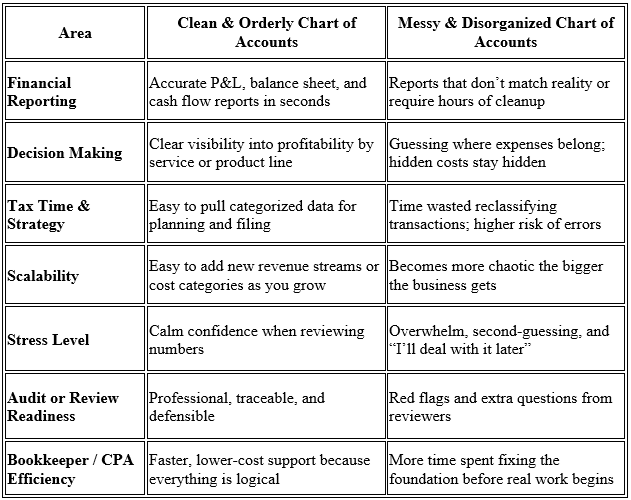
Comparison Table Clean v Messy Accounts
Why This Matters More Than Most People Realize
A clean chart of accounts doesn’t just look nice on paper. It directly impacts how confidently you can run your business.
You can see true profitability. You can spot trends early. You can make pricing or hiring decisions with real data instead of gut feel.
This clarity becomes especially valuable when you need reliable numbers for a business sale or valuation, securing financing, or other major decisions. When those moments come, clean accounts let you move forward with confidence instead of scrambling to explain or reconstruct your financial picture.
How Messy Charts Usually Happen
Most of the time it’s not intentional. It starts with:
Quick setup without a clear plan
Adding new accounts on the fly without consistent naming
Combining personal and business expenses
Multiple people (or previous bookkeepers) using different logic
Not reviewing the structure as the business evolves
The good news? It’s very fixable.
Simple Steps to Clean It Up
Step back and define your main categories based on how you actually run the business.
Standardize naming conventions (e.g., “Office Supplies – General” vs. random labels).
Remove or merge duplicate or rarely used accounts.
Set up sub-accounts only where they genuinely add clarity.
Review quarterly and adjust as your business grows.
If this feels overwhelming or you’re not sure what “good” looks like for your specific industry, that’s exactly what a diagnostic review is for. I help business owners get their foundation solid so the rest of their financial picture becomes clearer and more useful.
Ready to Own Your Numbers with Real Clarity?
A clean chart of accounts is one of the highest-leverage improvements you can make in your bookkeeping. It costs very little time or money upfront and pays dividends every single month.
If your current setup feels cluttered or you want a second set of professional eyes on it, I offer a focused diagnostic review that gets your accounts organized and aligned with where your business is headed.
Let’s make your numbers work for you, not against you.
This article is for general information only and is not tax, legal, accounting, or insurance advice for your specific situation. Rules depend on your facts and current law. Talk with your CPA and, when needed, an attorney before you file, elect, or change anything.