

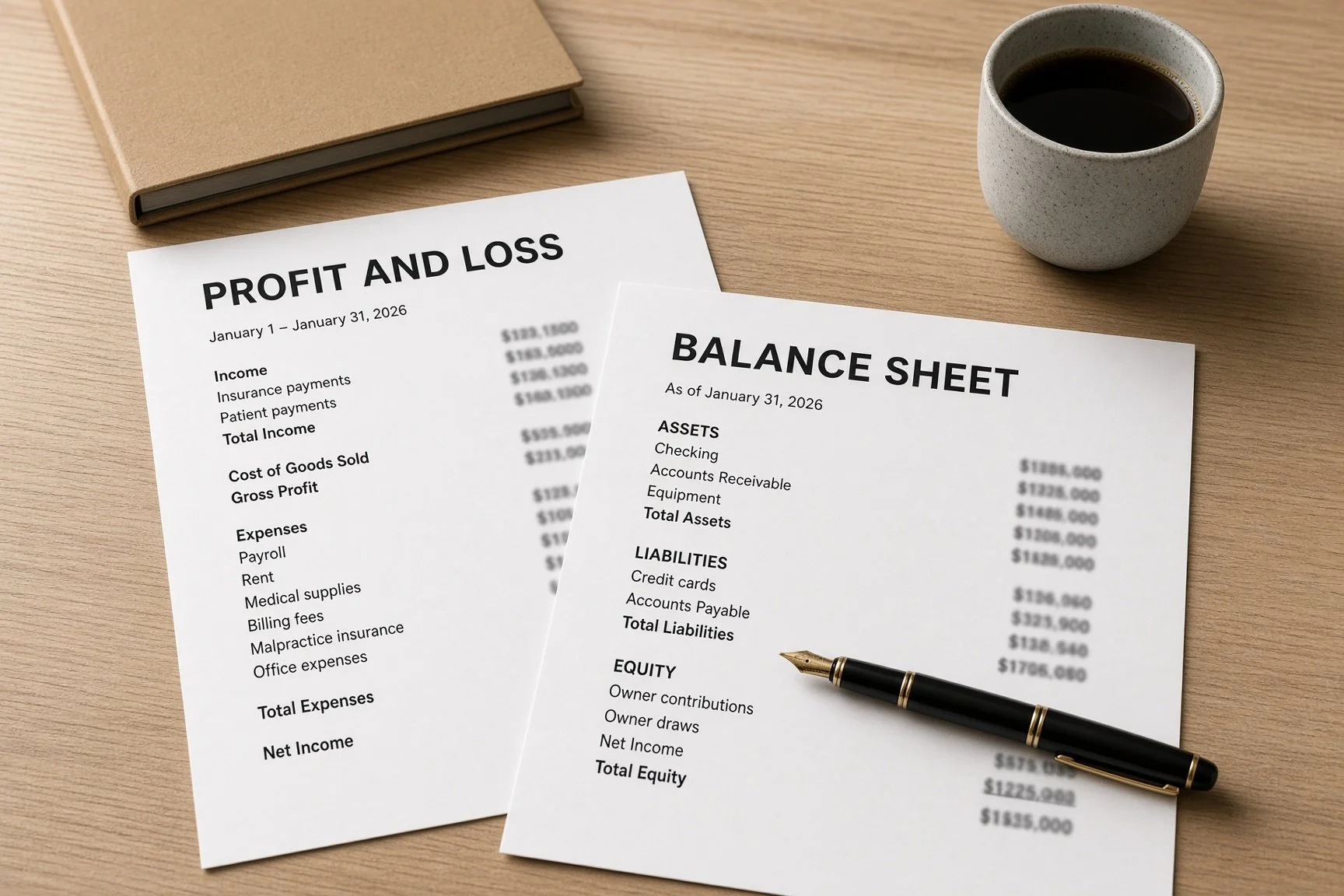
If You Don’t Read the Reports, You May Be Trusting the Wrong Numbers (for small medical practices)
Once a month, open the P&L and the Balance Sheet. Check whether the lines match the practice you actually run.

Contractor Invoices and Job Files: What to Keep and What Gets You Paid
The app sent the invoice. The glove box kept the receipts. Here is what belongs in the job file so you actually get paid and the books can explain the year.

Don’t Blindly Sign Your Tax Return — Check Schedule C First
You don’t prepare the return. Check three lines on Schedule C, the extra list at the bottom, and whether your health premiums made it onto the personal return before you sign.

Owner’s Draw ≠ Business Expense (For solo medical practices and small contractors)
Many solo medical practices and small contractors mix personal and business expenses in QuickBooks, making it hard for their tax accountant to spot deductible items. Learn a simple way to keep everything clean while still capturing medical premiums, retirement contributions, and vehicle costs for year-end tax planning.
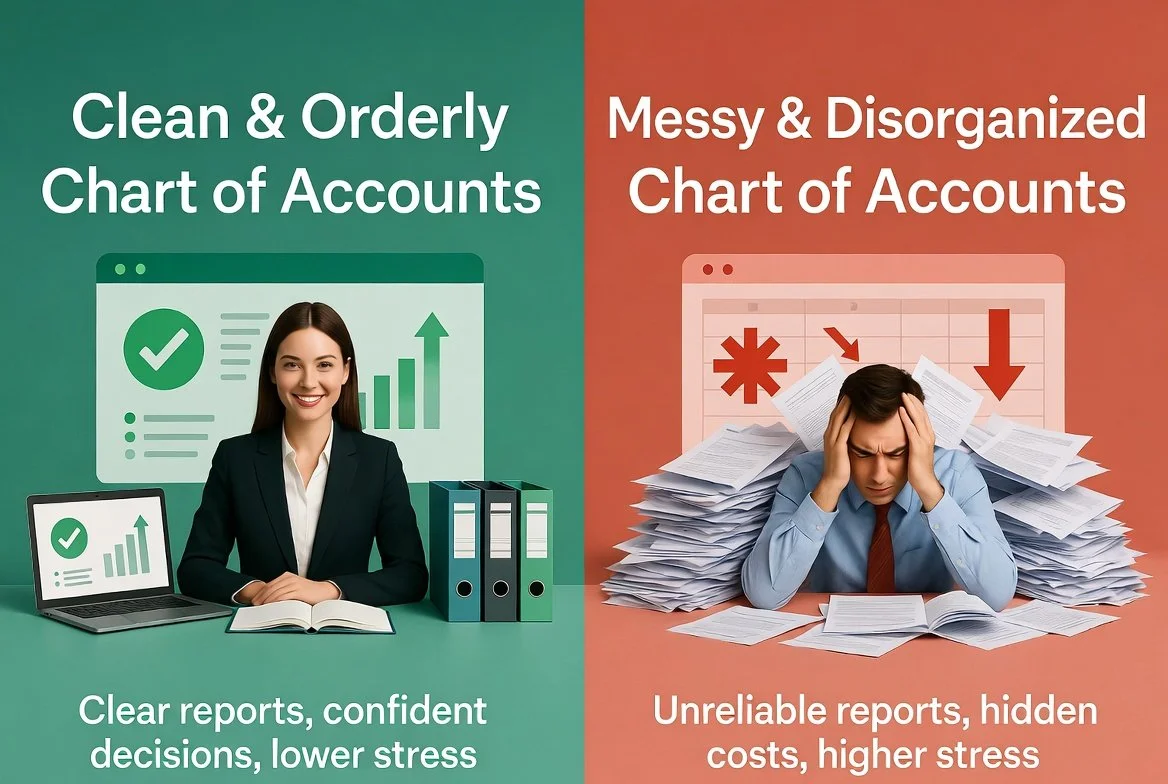
Clean vs. Messy Chart of Accounts: Why Structure Wins for Small Businesses
Your chart of accounts quietly shapes every financial decision you make. A clean, logical structure gives you accurate reports, better visibility into profitability, and far less stress at tax time or during major business decisions. A messy one does the opposite. This post breaks down the real difference and why it’s worth fixing.